
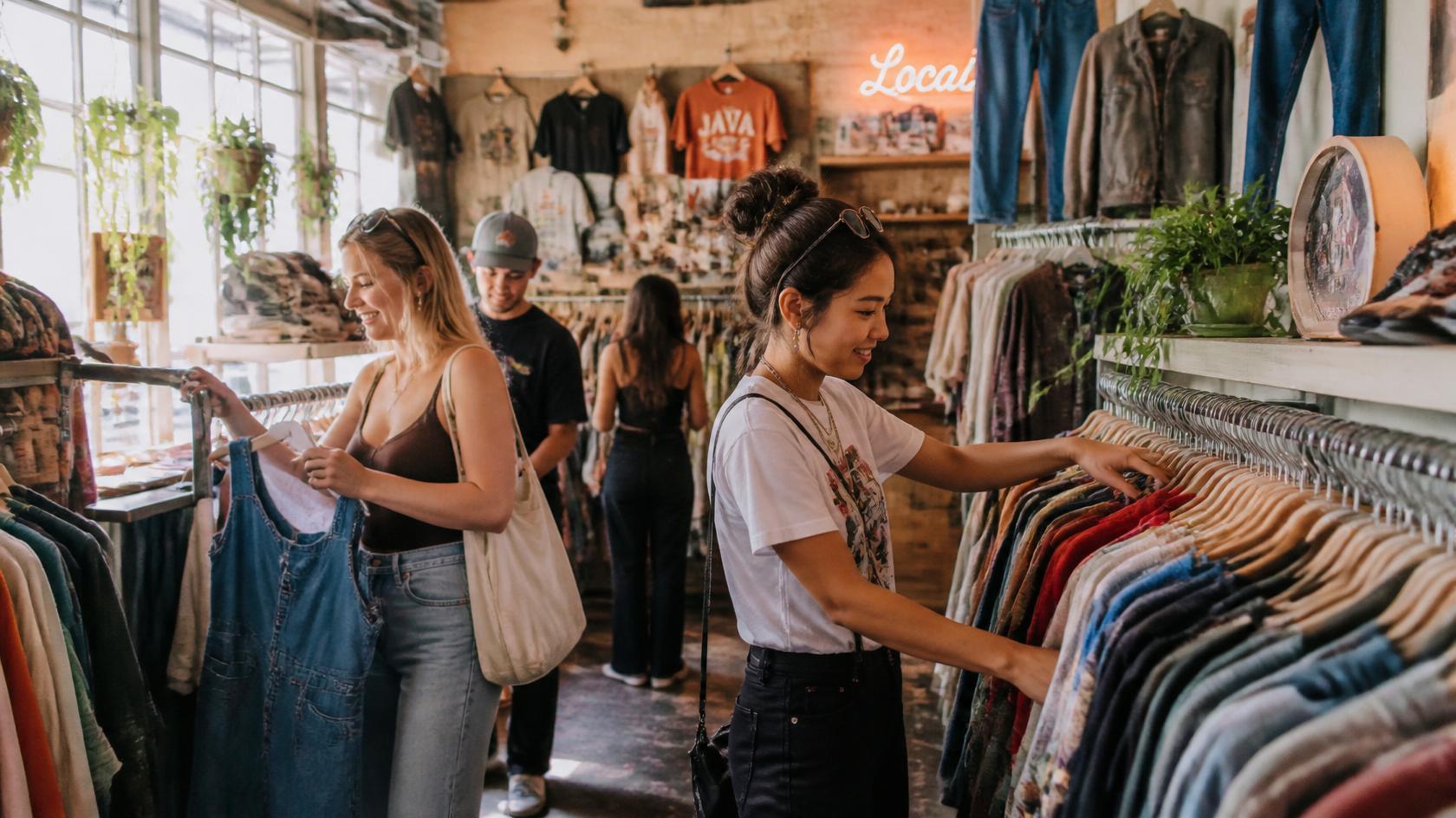
Gen Z Is Choosing Consignment First, But Only From Stores They Trust
The largest and fastest-growing segment of secondhand buyers in 2026 is Gen Z, and they are defaulting to resale before ever considering buying new. But new data shows that trust, not price, is the defining factor in which consignment stores they buy from and return to.
Gen Z is now the primary driver of secondhand market growth, with 57% buying secondhand in the past 12 months, more than twice the rate of Gen X. But they are also the most unforgiving customer segment: 60% have stopped buying from a brand after a single poor experience. For consignment store owners, that means capturing Gen Z demand requires more than having the right inventory, it requires the kind of fast processing, accurate listings, transparent consignor systems, and seamless online experience that builds and holds their trust.
The consignment opportunity in 2026 is real and well-documented. What is less discussed is who is driving it, what they want, and why the stores that fail to understand them will watch this opportunity pass while better-prepared competitors capture it. The answer to all three of those questions is the same: Gen Z.
Understanding the Gen Z Secondhand Buyer in 2026
Gen Z, broadly defined as those aged 14 to 30 in 2026, has already made its purchasing decisions in ways that most traditional retailers are still failing to absorb. They did not inherit a preference for secondhand shopping. They built it. Over 80% of Gen Z shoppers have purchased secondhand, and a growing majority now check resale options before they even look at new retail, because for this generation, secondhand is not a budget compromise. It is the default choice.
According to FashionUnited’s May 2026 analysis of Seel’s Gen Z Shopping Report, based on a survey of 1,100 U.S. consumers, 57.4% of Gen Z respondents bought secondhand or resale online in the past 12 months, compared to 52.8% of Millennials and just 26.2% of Gen X. The gap between Gen Z and every other generation is not narrowing. It is widening as their purchasing power grows.
“Gen Z is already buying secondhand in record numbers. The question is which platforms and stores earn their loyalty — and keep it.”
— Laura Huddle, Chief Revenue Officer, Seel (May 2026)
What drives them is a mix of values and pragmatism that peer-to-peer apps have partially captured but independent consignment stores are uniquely positioned to own. Price is the top purchase driver at 54.8%, followed by better value on premium or branded items at 39.9%. Sustainability, while still a factor, ranks below both, at 27.8%. This matters for how consignment stores position themselves: Gen Z responds to value and quality curation, not just an eco-narrative.
Gen Z and Millennials together are expected to drive more than 70% of total secondhand market growth through 2030. The U.S. secondhand apparel market is on track to reach $78.8 billion by 2030, growing 7.3% annually, nearly four times faster than the broader retail clothing market. The demographic driving that growth is already shopping. The question is where they shop.
The 5 Trust Signals Gen Z Shoppers Are Evaluating
Trust for Gen Z secondhand buyers is not abstract. It is built, and destroyed, by specific, operational details in every interaction with your store. These are the five signals they are actively reading:
- Photography quality and honesty
Gen Z buyers are visually native. They can read a photograph in seconds and immediately assess whether it is honest or flattering. Multiple clear images that show condition, labels, measurements, and any flaws, without hiding anything, build the confidence to purchase. Sparse, poorly lit, or single-angle photos communicate that the seller is not serious and the item description cannot be trusted.
- Complete and accurate item descriptions
Vague descriptions, “good condition,” “some wear,” “fits true to size”, do not provide the specific information Gen Z shoppers need to feel confident buying without touching the item. Complete descriptions that include brand, measurements, material, specific condition notes, and any defects reduce return risk and increase purchase confidence. AI-generated descriptions that cover every required field consistently outperform manually written ones here.
- Real-time, accurate inventory
Nothing damages trust with an online buyer faster than purchasing an item that is already sold out, the classic problem of unsynchronized in-store and online inventory. For Gen Z buyers who discovered your store online and placed their first order, an oversell cancellation is not a minor inconvenience. It is the experience that sends them to a competitor and keeps them there. Real-time inventory sync between your in-store POS and online storefront is non-negotiable for this buyer group.
- Speed: from listing to delivery
Gen Z is an immediacy generation. Items that sit in an intake queue for days before going live create a discoverability gap that loses buyers to whoever listed first. Fast processing also signals an organized, professional operation, and Gen Z buyers associate processing speed with operational trustworthiness. If your store can list an item the same day it arrives, that speed is visible in your listing dates and freshness, and buyers notice.
- Frictionless returns and clear policies
61.2% of Gen Z respondents said they have decided not to buy something online because of the return policy. A clear, fair, and easy-to-find returns policy is not just customer service infrastructure, it is a conversion tool. For secondhand items where condition cannot be physically verified before purchase, the presence of a clear return policy reduces purchase anxiety enough to convert hesitant first-time buyers into completed orders.
Why Independent Consignment Stores Can Win Gen Z Trust Better Than Any App
As Forbes’ April 2026 analysis of Gen Z retail behavior highlights, 64% of Gen Z shoppers now go secondhand first, before ever looking at new retail. But they did not arrive here passively. They moved to secondhand because traditional retail kept failing to meet their expectations on value, authenticity, and environmental accountability. The brands and stores that built that loyalty are the ones that met Gen Z where they were, not the ones that treated them as younger Millennials and marketed accordingly.
For independent consignment stores, the structural advantage over peer-to-peer platforms is significant and specific. Peer-to-peer apps are flooded with inconsistent quality, dishonest condition grades, and zero accountability when something goes wrong. An independent consignment store that authenticates every item, grades it honestly, photographs it thoroughly, and stands behind the sale is delivering exactly what the trust-gap data says Gen Z is looking for and cannot reliably find on an app.
The advantage only materializes, however, if the operational side supports it. A store that delivers excellent in-person curation but has a slow online catalogue, inaccurate inventory, or vague descriptions is still failing the Gen Z buyer at the digital touchpoints where they first encounter, and evaluate the store.
How Consignment Store Owners Can Capture the Gen Z Opportunity
Process items faster so your catalogue stays fresh and competitive.
Gen Z buyers browse online constantly and gravitate toward stores with fresh, recently listed inventory. Items that sit in a processing queue for days lose the immediacy advantage. AI-powered item entry that reduces intake from minutes to seconds keeps your online catalogue current and signals to browsers that this is an active, well-run store.
Invest in consistent, complete listing quality: Every listing is an audition for a first-time buyer’s trust. Inconsistent description quality, detailed for some items, vague for others, reads as disorganized. AI-generated descriptions that cover every field consistently, every time, remove the quality variance that erodes buyer confidence before a purchase decision is even made.
Sync in-store and online inventory in real time: A single oversell experience can permanently lose a Gen Z buyer. Real-time inventory sync between your POS and online storefront eliminates the risk that an in-store sale creates an unfulfillable online order. This is the single most trust-critical infrastructure decision for a consignment store with an online channel.
Build your return and exchange policy before you need it: over 61% of Gen Z buyers check the return policy before purchasing. Write a clear, fair, and prominently displayed policy before a single Gen Z buyer reaches your checkout. The policy does not need to be liberal, it needs to be clear and honest. Clarity converts more than generosity.
Make your online presence look as curated as your floor: Gen Z buyers evaluating your online store are comparing it, consciously or not, to the visual standard they see on Instagram, TikTok, and well-designed resale storefronts. A Shopify storefront with consistent photography, complete descriptions, and clear organization signals the same level of professionalism they would experience in a well-run physical store. Inconsistency between your in-store curation and your online presentation creates distrust that prevents the first purchase.
The fastest way to meet Gen Z’s expectations for listing freshness, description quality, and inventory accuracy is AI-powered item entry. Aravenda processes incoming consignment from a mobile photo to a live listing in seconds, complete descriptions, accurate categories, pricing suggestions, and real-time Shopify & Clover sync included. See how Aravenda AI Item Entry reduces processing time to seconds →
The window to earn Gen Z loyalty is open right now, but it will not stay open indefinitely. As the secondhand market becomes more competitive and more Gen Z buyers have established preferences, the cost of winning a first-time buyer will rise and the cost of losing them after a poor experience will compound. The stores that deliver trust consistently in 2026 are the ones building the customer relationships that sustain growth through 2030 and beyond.
Ready to build the operational foundation that earns and keeps Gen Z trust? See how Aravenda helps consignment stores process faster, list better, and sell smarter.